Review by Jimmy Parker
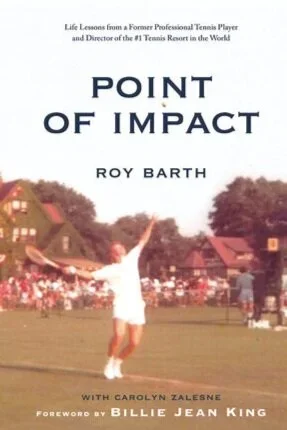
Roy Barth was a player to be reckoned with on the pro tour in the late 1960s and early 1970s. Open Tennis began in 1968 and the Association of Tennis Professionals (ATP) was founded in 1972, a period coinciding with Roy’s peak. Roy attained Top Ten national rankings—No. 8 in singles and in the top 6 in doubles, with three different partners - Tom Gorman, Steve Tidball, and Tom Edlefson.
Part of the allure of this book lies in the detailed stories of matches Roy played against the top players of that era. He had to have been keeping a diary of sorts to be able to recount the point-by-point see-saw of some of the on-court encounters, now about fifty years in the rear-view mirror. Of course, I was especially engaged because so many of the names he mentions were players I knew from being roughly of the same era, about five years ahead of Roy.
There are lessons embedded in every sport—especially in the individual sports. Some of the lessons come from on-court experiences, but many come from just the straightforward demands of living life on the tour. In those days, there were no entourages accompanying the top players around the globe. After playing in the warm bath of college tennis with its complement of coaches, trainers, and team members, it was a bit of a shock for Roy to encounter the aloneness of the tour.
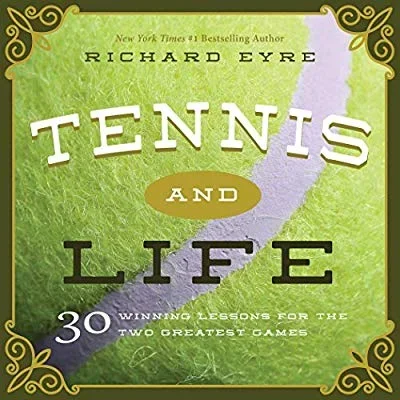
As any of the players trying to make a living as a tennis pro will tell you, a lot of what you learn comes off-court. You’re forced to be resilient, resourceful, and positive amidst weekly losses. Although he didn’t really realize it at the time, Roy was being educated in ways that would later play a big role in his post-tour success. And I think that’s probably one of the main reasons why Roy wrote the book: to show how competing on the tennis court set the stage for applying what he learned there to everyday living.
The second part of the book applies those lessons to the business of tennis. Roy’s experiences from his playing days enabled him to navigate difficult challenges as the Director at Kiawah Island Resort in South Carolina. For example, his ability to set mini-goals, cultivate relationships, learn from those around him, and follow other tenets of success helped Roy lead Kiawah to become “The Number 1 Tennis Resort in the World.”
Roy’s love of the game shines through the entire book. He has involved himself in so many different ways with the task of growing tennis. His work within the USTA, USPTA, PTR, and numerous other organizations reflect a tennis life well-lived. A member of several Halls of Fame, he exemplifies what we all secretly hope—that athletic competition does indeed hone important life skills.
Thanks, Roy, for sharing your multi-faceted engagement with our game!